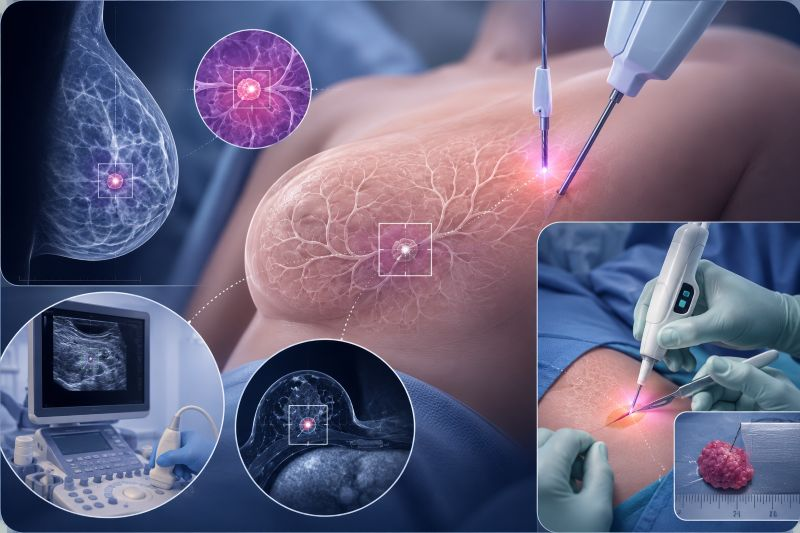
Mammography is an examination that allows imaging of the breast with low-dose X-rays. The main aim is to detect structural changes in the breast at an early stage. Small masses that cannot be felt on examination, increased density in breast tissue, or certain types of calcifications can be seen earlier with mammography. For this reason, mammography may be requested both for screening purposes and for diagnostic evaluation when there are symptoms or examination findings.
When planning a mammogram, factors such as the person’s age, breast tissue density, family history, and previous imaging results, if any, are taken into account. In some people, mammography alone provides sufficient information. In some cases, it is evaluated together with additional examinations such as breast ultrasound. Especially in people with dense breast tissue, different methods may need to complement each other. What matters here is not making a definite interpretation based on a single imaging result, but evaluating the findings as a whole.
Different expressions may appear in the mammography result report. Terms such as “mass,” “asymmetry,” “density,” or “calcification” may not always indicate a malignant condition. Some findings may occur for benign reasons. In cases considered suspicious, additional imaging, comparative evaluation, or, when necessary, a biopsy plan may come to the agenda. This process is a standard approach used to clarify uncertainty and reach the correct diagnosis.
- What Is Mammography?
- In Which Situations Is Mammography Performed?
- How Is Mammography Performed?
- How Long Does a Mammogram Take?
- What Should Be Considered Before Mammography?
- At What Age Should Mammography Be Performed?
- Is Mammography Harmful?
- How Are Mammography Results Evaluated?
- Mammography or Breast Ultrasound?
- What Happens If the Mammography Result Is Suspicious?
- Frequently Asked Questions About Mammography
What Is Mammography?
Mammography is an imaging method that can show the internal structure of the breast in detail. During the examination, the breast is briefly compressed between the two plates of the device so that the tissue can be seen more clearly. Compression not only improves image quality but also helps keep the X-ray dose used during the scan lower. In mammography reports, findings such as breast tissue density, mass-like formations, areas of asymmetry, and certain types of calcifications may be described.
An important feature of mammography is that it can be used to detect small changes in the breast that cannot yet be felt by hand. For this reason, when planned for screening purposes, it may be performed at regular intervals even in the absence of symptoms. When requested for diagnostic purposes, the evaluation is directed at clarifying the cause of a particular symptom or examination finding. In both cases, the result is assessed together with the person’s age, breast structure, and previous imaging studies.
In Which Situations Is Mammography Performed?
Mammography is requested either to clarify the cause of a finding in the breast or to perform regular follow-up within the scope of breast cancer screening. The situation in which it will be performed is planned according to the person’s age, risk level, and current complaints. For this reason, mammography can be used not only as a “routine check” but also as a diagnostic step seeking an answer to a specific clinical question.
Screening mammography aims to detect changes in breast tissue at an early stage within certain age ranges, even when there are no symptoms. In those with a family history of breast cancer, in those who were previously found to have a breast-related finding requiring follow-up, or in those with a high-risk assessment, the screening plan may begin at an earlier age and the follow-up intervals may be adjusted individually. The aim here is to monitor small changes that may develop over the years by comparing them with previous images.
Diagnostic mammography, on the other hand, comes into consideration when there is a newly developing or changing finding in the breast. Mammography may be requested in situations such as a palpable breast mass, noticeable firmness in one part of the breast, a change in breast shape, skin dimpling or an orange-peel appearance, nipple retraction, spontaneous discharge especially from one breast, or persistent redness or crusting around the nipple. Newly noticed swelling in the armpit is also among the findings that require evaluation. In addition, if there was an area in a previous mammogram for which follow-up was recommended, a control mammogram is planned to continue that monitoring.

How Is Mammography Performed?
Mammography is an imaging procedure performed standing up in the radiology unit. Before the scan, the person prepares with the upper body uncovered and removes metal accessories such as necklaces. The radiology staff provides guidance so that the breast is positioned correctly in the device.
During the scan, the breast is placed on the flat surface of the device, and the upper plate briefly compresses and stabilizes the breast. This compression allows the breast tissue to be seen more clearly. Overlapping of tissues is reduced, small findings become easier to identify, and the need for repeat imaging decreases. Compression lasts only a few seconds, and the plates open once the image is completed.
Usually, two basic images are obtained for each breast: one from top to bottom and the other at an oblique side angle. In some cases, additional positions, magnification views, or targeted images may be requested to evaluate a specific area in more detail. Taking additional images is often done to improve technical clarity and does not, by itself, mean there is a negative condition.
It is important not to move during the scan, because movement may cause the image to appear blurred. If there is breast tenderness, scheduling according to the menstrual cycle may provide more comfort.
How Long Does a Mammogram Take?
Although the actual imaging part of mammography is short, the total time may vary depending on preparation, positioning, and whether additional images are needed. In some people, due to the structure of the breast tissue, positioning must be done more carefully, which can extend the duration. Likewise, if comparison with previous films is needed, the reporting time may vary. A longer mammography duration usually does not mean that “there is a finding”; it is generally related to the aim of improving image quality. When the results become available may vary depending on the workflow of the center, reporting volume, and the need for additional evaluation.
What Should Be Considered Before Mammography?
On the day of mammography, it is important not to apply deodorant, powder, or cream to the breast and armpit area. Some components of these products may appear as small spots on the image and lead to unnecessary repeat imaging. Wearing two-piece clothing is practical, since the upper garment needs to be removed for the scan. If you have previously had mammography or breast ultrasound, bringing the previous images is valuable for comparison. In people with breast tenderness, planning the scan according to the menstrual cycle may provide comfort; it is appropriate to do this planning with medical guidance. If there are regularly used medications or recent procedures performed in the breast area, informing the staff before the scan supports report interpretation.
At What Age Should Mammography Be Performed?
Mammography is generally planned after the age of 40 in women at average risk. Because breast cancer may progress without causing symptoms in its early stages, screening mammography gains importance from certain ages onward. For this reason, regular follow-up at specified age intervals is recommended not only when there is a complaint, but also when there are no symptoms. In the current screening approach, mammography once every 2 years is recommended between the ages of 40 and 74. This practice may help detect small changes and early findings in the breast that cannot yet be noticed by hand.
However, not all recommendations are applied in the same way for every person. Some guidelines include the option of starting annual screening between the ages of 40 and 44. While mammography once a year is more frequently recommended between the ages of 45 and 54, once every 2 years may be considered sufficient after the age of 55. However, if the person’s general health status is good and regular screening is expected to be beneficial, the follow-up plan may continue even at older ages. Therefore, mammography is not an examination that needs to be performed only once at a certain age; it is a screening method that can be repeated at certain intervals as age advances.
The age and frequency of mammography are determined not only by calendar age, but also by the person’s individual risk status. A family history of breast cancer, breast cancer in a mother, sister, or close relatives, situations suggesting genetic predisposition, previously detected breast findings that required biopsy, or a history of a breast condition requiring close follow-up may change the screening plan. In such cases, mammography may be started at an earlier age and follow-up intervals may be kept shorter.
Is Mammography Harmful?
Low-dose X-rays are used in mammography. For this reason, the issue of “radiation” is frequently asked about. The possible benefit of mammography and the dose involved are evaluated by taking screening programs and diagnostic needs into account. This is why it is important for the imaging frequency to be planned by a physician. To avoid unnecessary repeat imaging, performing the scan with the correct technique and comparing previous images are also part of the process. If there is a possibility of pregnancy, this should definitely be reported before the scan; in that case, alternative evaluation options may come into consideration.
How Are Mammography Results Evaluated?
The mammography report is evaluated by considering the type, distribution, and characteristics of the finding. Terms such as “mass,” “asymmetry,” “increased density,” or “calcification” may appear in reports. These terms do not, by themselves, indicate a malignant condition; many findings may also occur for benign reasons. The meaning of the results is assessed together with the person’s age and the structure of the breast tissue. In many cases, comparison with previous mammograms is decisive in determining whether there has been any change. Some reports may recommend additional imaging; this recommendation is a standard step to clarify the finding.
Mammography or Breast Ultrasound?
Mammography and breast ultrasound should not be thought of as procedures that replace one another; in many cases, they complement each other. Mammography may stand out in showing certain types of calcifications and the general tissue structure. Breast ultrasound, on the other hand, may be useful especially in dense breast tissue, in distinguishing fluid-filled structures from solid masses, and in targeted evaluation of a specific area. Which method will be preferred first is planned according to the person’s age, breast tissue density, and current complaint. In some cases, both methods may be requested together; this serves the purpose of making a broader evaluation.
What Happens If the Mammography Result Is Suspicious?
The expression “suspicious” usually describes a finding that needs further clarification. In this situation, the first step is usually additional imaging. Targeted mammography images, magnification views, or breast ultrasound may be requested. The aim is to assess the borders and characteristics of the finding more clearly. After additional evaluations, short-interval follow-up may be recommended for some findings. In some cases, a biopsy may come into consideration. Recommending a biopsy does not automatically mean a malignant result; it is performed to clarify the tissue diagnosis of the area considered suspicious. Proper management of the process is possible when the report is explained by the physician and the necessary steps are planned in order.
Frequently Asked Questions About Mammography
How Often Should Mammography Be Performed?
The interval varies depending on age and risk status. In cases such as a family history of breast cancer, a previously detected finding requiring follow-up, or genetic risk, the follow-up plan may differ. Therefore, the most accurate approach is to determine the screening frequency individually based on a physician’s evaluation. Since previous mammograms can be compared during regular follow-ups, keeping past records is also important.
Is Mammography Painful?
Because the breast is briefly compressed during mammography, some discomfort may be felt. Sensitivity varies from person to person, and factors such as breast tissue structure, the timing of the scan, and individual pain threshold can affect this sensation. To reduce discomfort, it may be preferable not to schedule the scan during the days when the breasts are more sensitive during the menstrual cycle. If severe pain is expected, informing the radiology staff beforehand may be helpful for positioning.
Why Is a Biopsy Performed After Mammography?
A biopsy is performed to clarify what a suspicious area seen on mammography represents. The aim is to determine whether the finding on the image is benign or whether it is a condition requiring further evaluation. Recommending a biopsy does not mean that the result will necessarily be malignant. It is often a standard step used to eliminate uncertainty and determine the correct treatment or follow-up plan.
What Is Digital Mammography?
Digital mammography is a type of mammography in which the images are obtained in a digital format. It may offer advantages such as allowing zooming and detailed image review, as well as making comparison with previous scans more practical. The quality of evaluation is related not only to the technical features of the device, but also to the quality of the imaging and the experience of the reporting specialist.
Which Department Should You Visit for Mammography?
Mammography is performed and reported in the radiology unit. Referral is usually made after evaluation by general surgery, obstetrics and gynecology, or family medicine. If there are symptoms, the initial assessment and referral are planned according to the characteristics of the finding. Having existing reports followed by the same physician may be beneficial for comparative evaluation.
Can Mammography Detect Breast Cancer?
Mammography can show findings that may be associated with breast cancer and is an important method for early detection. However, mammography alone does not provide a definitive diagnosis. If there is a suspicious finding, the diagnosis is clarified with additional imaging methods and, when necessary, biopsy. In addition, because the sensitivity of mammography may be affected in dense breast tissue, evaluation together with complementary methods such as breast ultrasound may be required.
What Does It Mean If a Mass Is Seen on Mammography?
Seeing a mass on mammography means that a round or irregularly bordered area has been detected in the breast. This finding may also occur for benign reasons. The borders, shape, density, and any accompanying findings of the mass are evaluated to determine whether further examination is needed. In many cases, more detailed information about the mass is obtained with targeted ultrasound, and follow-up or biopsy is planned if necessary.
What Does Calcification Mean on Mammography?
Calcification is a term used for small calcium deposits in the breast. The distribution and appearance of calcifications are important. While some types of calcifications may be associated with benign processes, others may require closer evaluation. In suspicious calcifications, magnification views may be requested, and in some cases, definitive evaluation is made with biopsy.